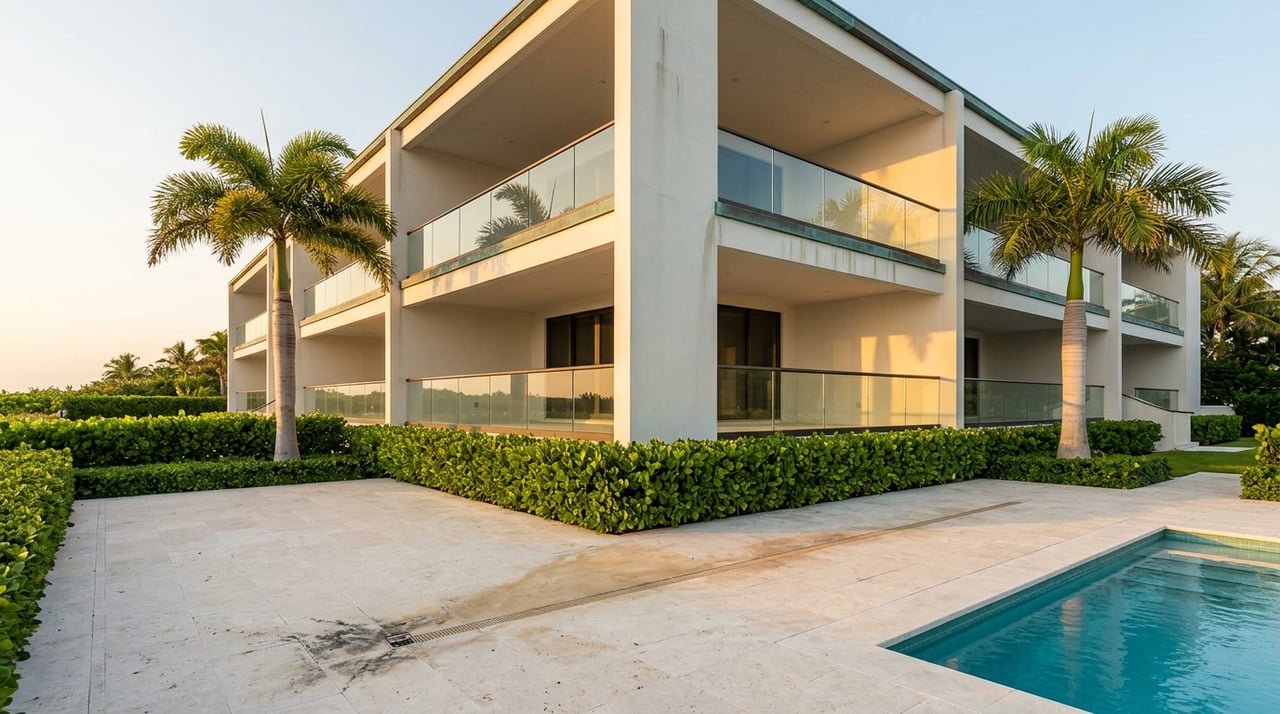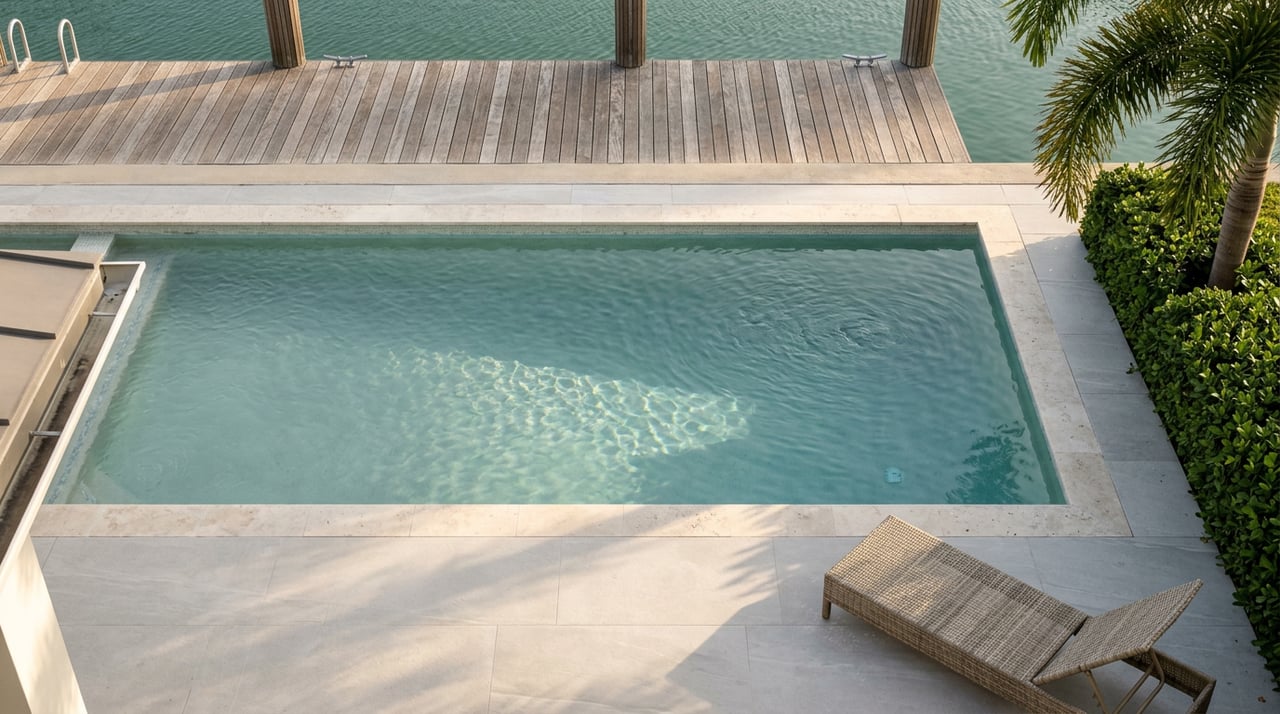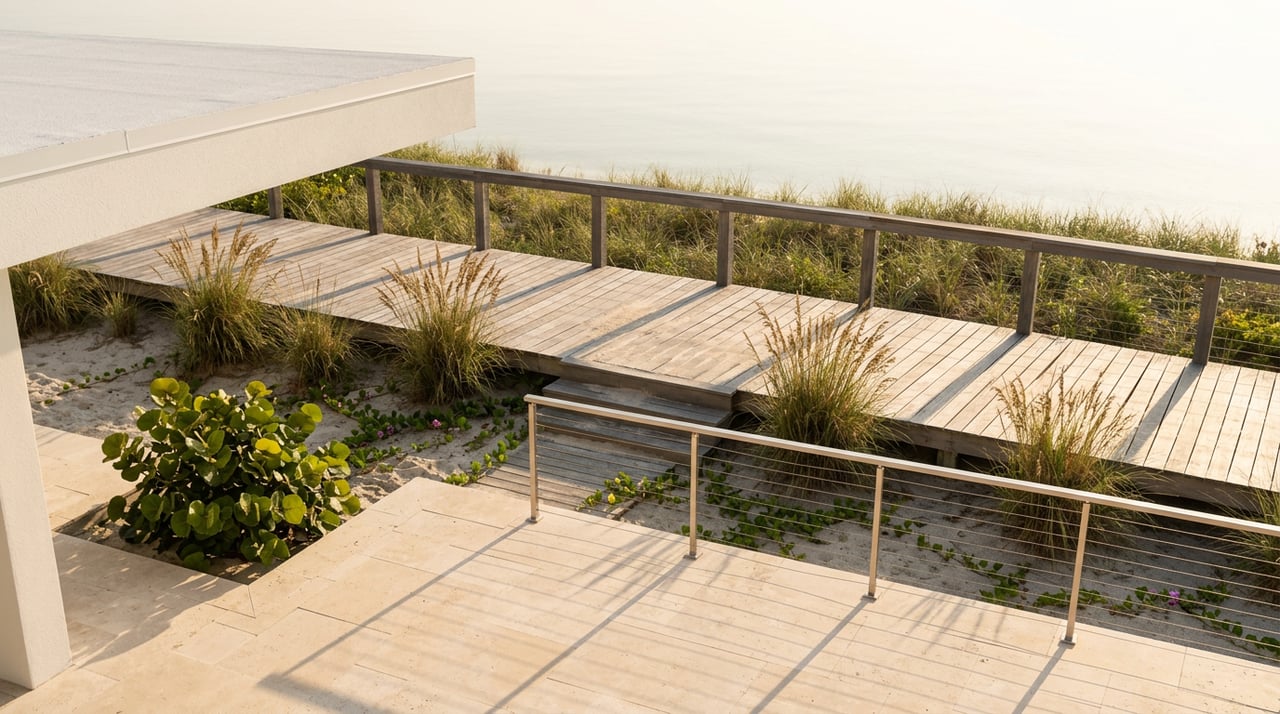
A buyer under contract on a canal-front lot in the Moorings this spring assumed the closing package included what the listing photos implied: a short walk or bike ride to a private stretch of Gulf sand. It didn't. What the deed transferred was the house, the lot, and the dock. The beach access is a separate product, sold by a private association, with its own price tag, its own paperwork, and its own rules about who gets to use it and when.
That distinction matters everywhere in Naples, but it matters in a specific and useful way in Moorings and Park Shore, two adjoining neighborhoods that both gate their beach parks behind membership cards and both just adjusted what those cards cost for 2026. The two associations that run these parks, however, handle the single biggest question a buy-to-rent owner will ask, whether a tenant can use the beach while the owner isn't living there, in almost opposite ways. If you're comparing these two neighborhoods as an investment rather than a lifestyle purchase, that difference is worth more to your underwriting than the median price per square foot.
The Membership Behind the Postcard
Neither the Moorings Property Owners Association nor the Park Shore Association is a mandatory HOA. Both describe themselves as voluntary organizations, and neither shows up as a line item you're required to pay at closing. What they control instead is physical access to a specific, gated beach park: Moorings Beach Park for MPOA members, and the Raymond L. Lutgert Beach Park for Park Shore Association members, a 200-foot, 2.7-acre stretch donated to the association by the Lutgert family in 1978.
Because membership is voluntary and tied to a specific parcel map rather than automatic with a Naples mailing address, both associations verify eligibility against a plat before they'll issue a card. MPOA's boundary runs roughly from Binnacle Drive on the north to just south of Spring Line Drive, from the Gulf to US 41, a footprint of about 730 acres holding roughly 875 single-family homes and 82 condo buildings. Park Shore's association draws its own boundary from the platted Park Shore subdivision, covering single-family parcels, condos, and villas across a neighborhood with more than 600 single-family homes and dozens of high-rise buildings. Buy a property outside either line, even one that feels like it should qualify, and there's no card waiting for you.
What Joining Actually Costs in 2026
Both associations raised or restructured their fee schedules heading into this year, and the numbers now sit close enough to invite comparison but far enough apart that they're worth laying out side by side.
| Moorings Property Owners Association | Park Shore Association | |
|---|---|---|
| Structure | Voluntary property owners association | Voluntary neighborhood association |
| New member cost, 2026 | $1,000 one-time fee + $200 annual dues | $1,000 one-time fee + $300 annual dues |
| Total to join, 2026 | $1,200 | $1,300 |
| Membership term | Calendar year, effective January 1 | Renewal window runs September through November |
| Lapse penalty | Two consecutive years of non-renewal resets you to new-member status and fees | $100 late fee if you haven't renewed by December 31 |
The Park Shore number is the one that moved the most. As recently as 2025, a new Park Shore member paid a $500 initiation fee. For 2026, the association doubled that to $1,000, citing reserve-building ahead of an anticipated park resiliency project. A buyer who priced beach access into an offer using last year's fee schedule underestimated the actual cost of the amenity by half.
The Rule That Actually Splits the Two Neighborhoods
Here's the part that matters if you're buying either property to hold as a rental rather than to live in yourself.
In the Moorings, membership is built around owner-occupancy. Only one property, the one considered your residence, can carry a general membership. Any other property you own in the neighborhood is treated as investment or rental real estate, and its access works differently: renters need a lease of at least 90 days, MPOA caps you at three renter passes per calendar year, each lease requires an additional $500 payment, and your own decal goes inactive for the full term of the tenant's lease. You don't get to use the beach park and rent the house at the same time. The association is explicit that this isn't a workaround glitch, it's the rule.
Park Shore runs it differently. A property owner there can purchase a household membership, and the association states plainly that it "may be used by the tenants of the owner," while the membership itself stays registered to the property owner rather than transferring outright. There's no 90-day minimum surfaced in the association's published rules, and nothing in Park Shore's FAQ suggests the owner's own access gets switched off the moment a lease starts.
Put those two structures next to each other and you get a genuinely different investment case. A Moorings property marketed with "private beach access" as a rental amenity can only actually deliver that amenity to a tenant on a 90-day-or-longer lease, and doing so costs the owner an extra $500 per lease while temporarily forfeiting personal use. A Park Shore property, by contrast, appears built to let an owner extend beach privileges to a tenant without that same seasonal minimum or fee stacked on top. If your acquisition model depends on shorter-term rentals, or on using the property yourself part of the year and renting it the rest, the mechanics of these two associations point toward two different answers, even though both properties might list "steps to private beach" in identical language.
The Gate Has Two Lanes for a Reason
One detail from Park Shore's own park rules is worth flagging because it shows how granular this gets. The security gate at the entrance to the Lutgert Beach Park is shared with the adjacent condominium buildings, and it operates with two lanes: one for Park Shore Association members heading to the beach, and a separate lane reserved for residents of the condo towers that sit next to the park, so their day-to-day building traffic isn't held up behind beach visitors. The association's own rules ask members to respect that lane split as a courtesy to the condo residents whose buildings host the shared gate.
That single operational detail is a useful proxy for the larger point. Beach access in these neighborhoods isn't a single uniform product. It's administered building by building and parcel by parcel, with condo associations, the neighborhood association, and in some cases individual towers all running slightly different pieces of the access puzzle. A generic assurance from a listing sheet that a building has "beach access" doesn't tell you whether that access runs through PSA membership, a building-specific arrangement, or something else entirely.
What to Verify Before You Price the Amenity In
Before treating beach access as a settled feature of a Moorings or Park Shore purchase, confirm the following directly with the relevant association rather than relying on the listing description:
- Whether the specific parcel or unit falls inside the association's mapped boundary, since eligibility is plat-based, not neighborhood-based
- The current new-member and annual fee schedule for the year you're closing, since both associations have changed pricing recently
- Whether the property would qualify for a general membership or would be treated as an investment property under the association's rules
- If you plan to rent the property, the minimum lease term, per-lease fees, and whether your own access is suspended during a tenant's stay
- Whether the specific condo building has its own separate beach-access or guest-pass system layered on top of, or instead of, the neighborhood association's membership
None of this shows up on a standard property disclosure. It comes from the associations themselves, and it changes year to year.
Frequently Asked Questions
Does owning property in the Moorings or Park Shore automatically include beach access? No. Both neighborhoods gate their beach parks behind separate, voluntary association memberships that owners apply and pay for after closing, and eligibility is verified against the association's own boundary map for the parcel.
What happens to my beach access if I rent out my Moorings property? Under MPOA's current rules, your own membership decal is deactivated for the length of any tenant's lease, the lease must run at least 90 days, and you pay an additional $500 per lease with a cap of three renter passes per calendar year.
Is Park Shore's beach access handled the same way? Not exactly. Park Shore Association membership stays registered to the property owner but the association states it may be used by tenants, and the association's published rules don't include the same 90-day minimum found in MPOA's structure.
Are the Moorings and Park Shore mandatory HOAs? No. Both organizations describe themselves as voluntary associations rather than mandatory homeowners associations, which is part of why beach access has to be purchased separately rather than arriving automatically with the deed.
If you're weighing a Moorings canal-front lot against a Park Shore condo and the beach amenity is part of your return math, that's exactly the kind of local mechanism worth running past someone who tracks it neighborhood by neighborhood. Naples Coastal Living works both sides of this comparison daily. Request a Private Market Update and we'll walk through what a specific parcel's association status actually means for your plans, before you write the offer, not after.