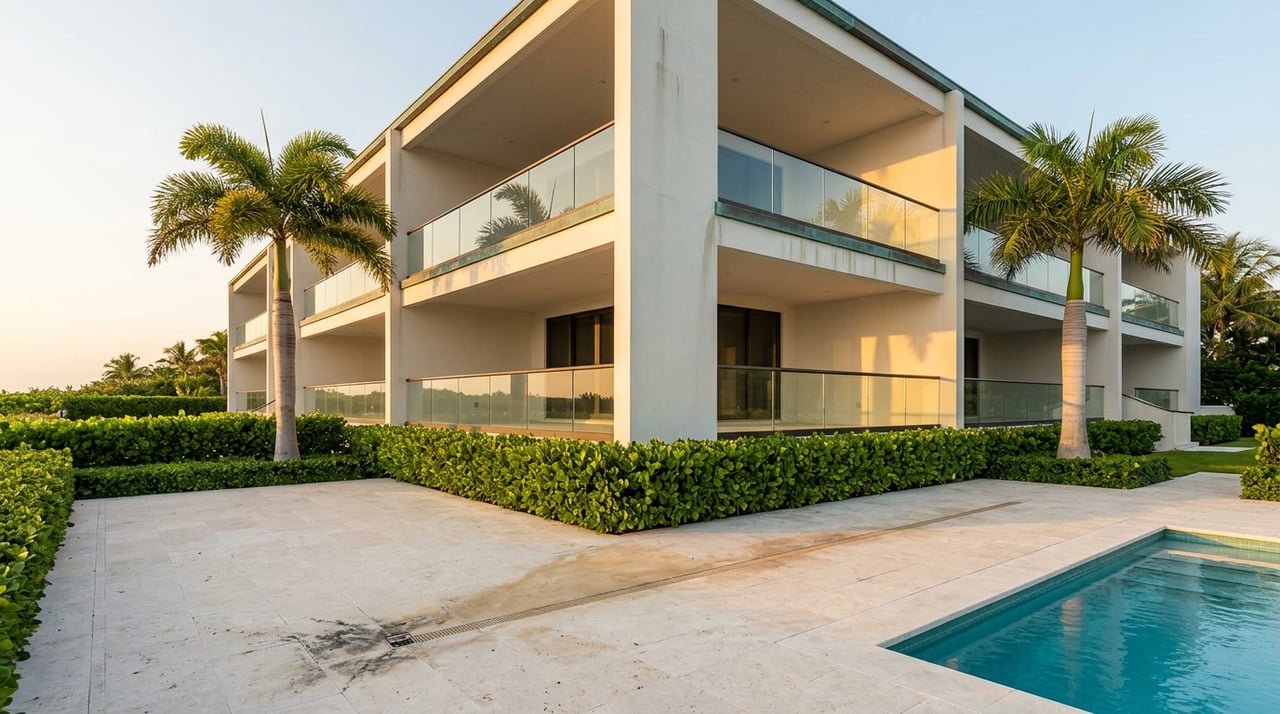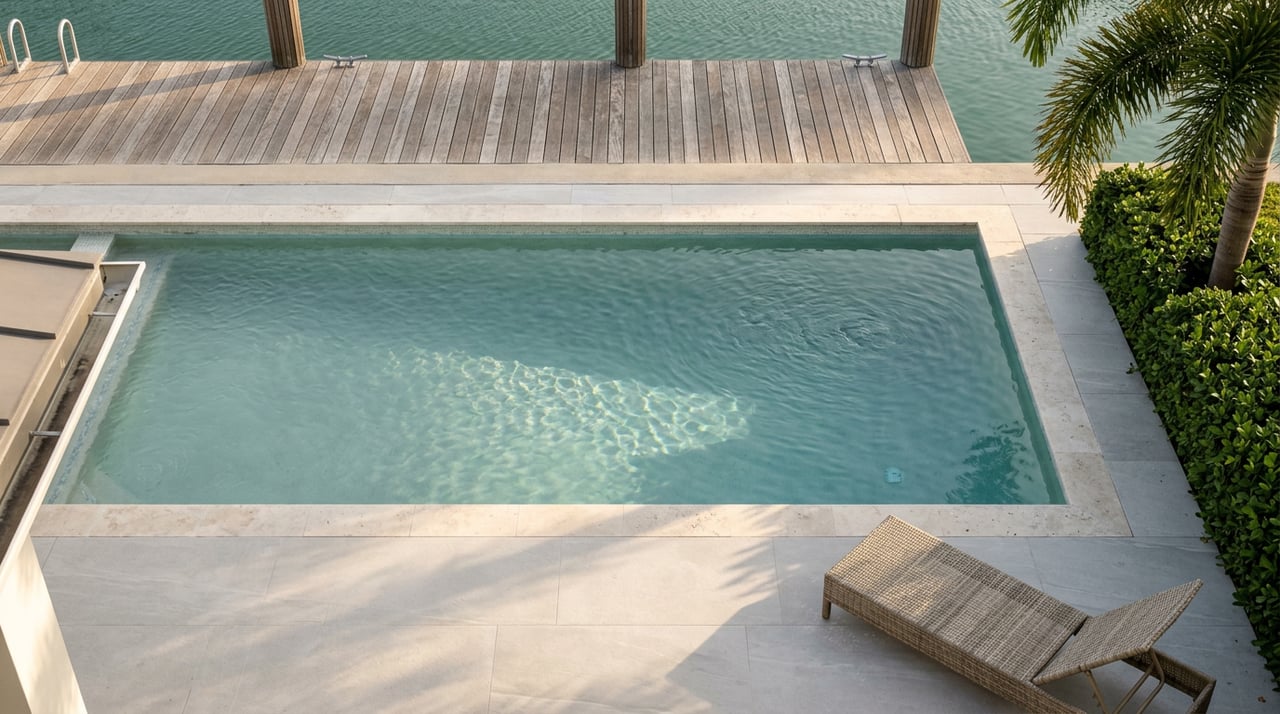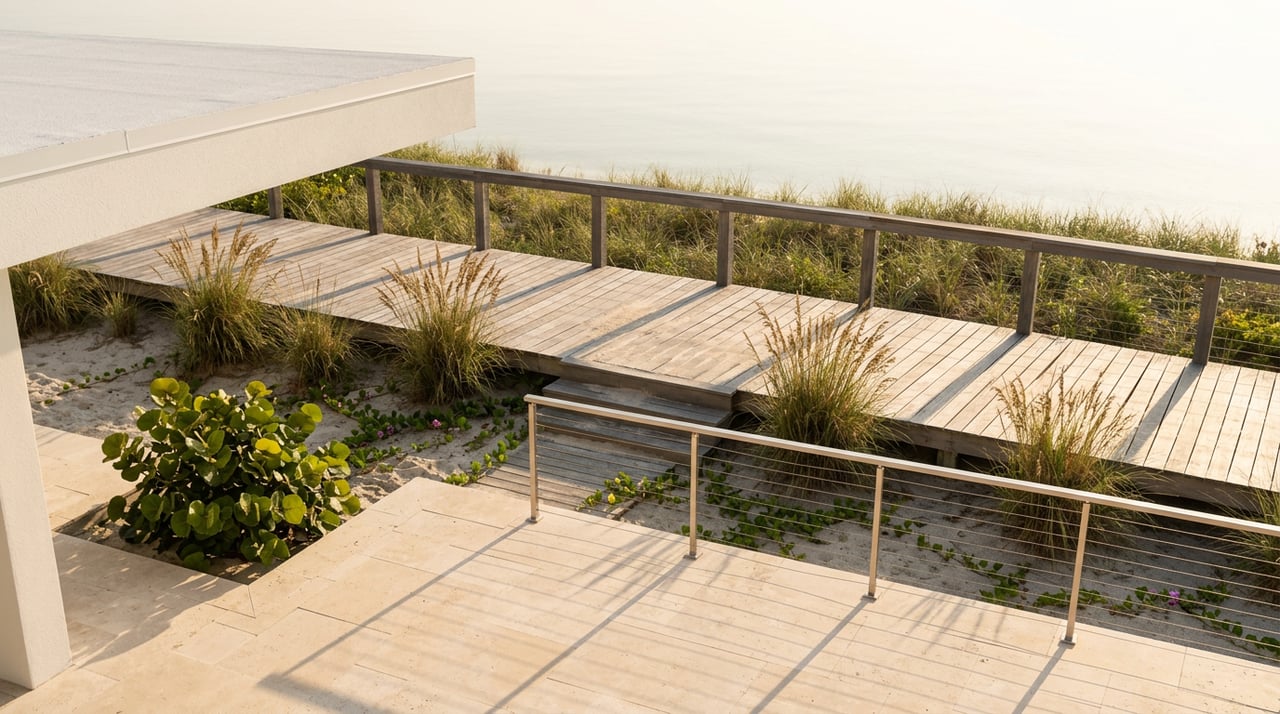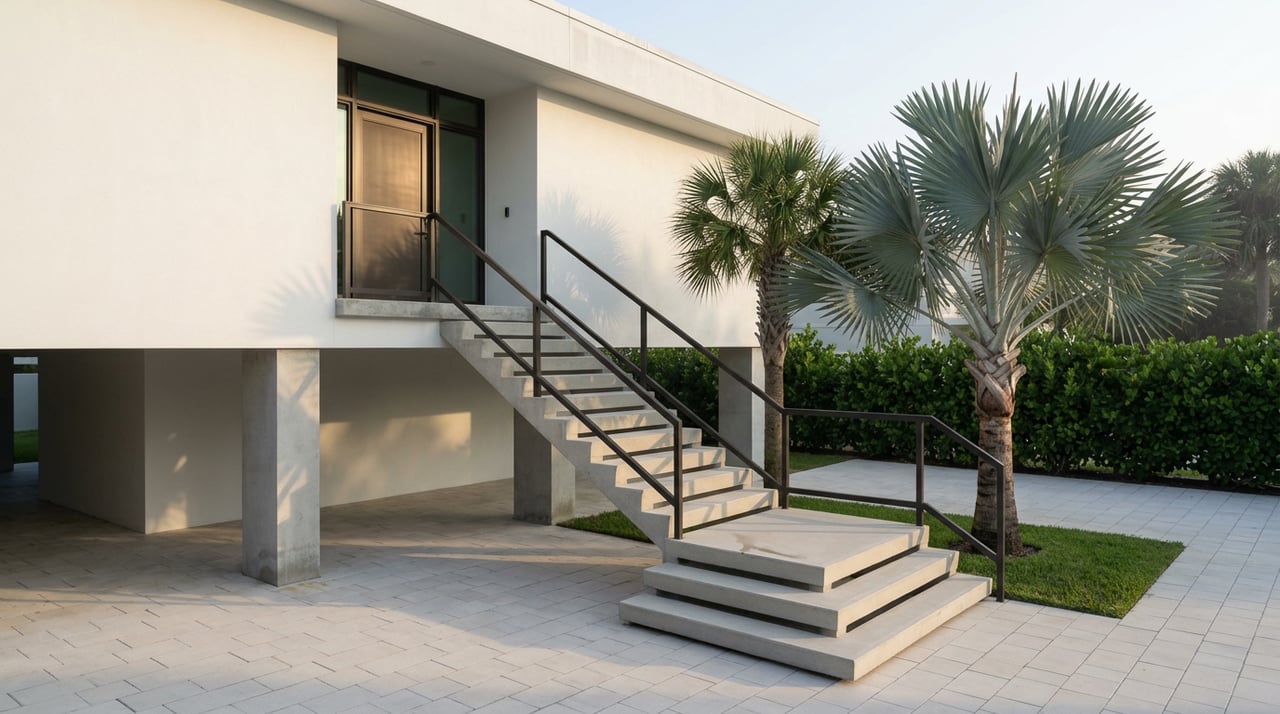
On the 500 block of West Davis Boulevard, a one story ranch house that would have sold for around $800,000 a few years back is gone. In its place sits a new construction home that closed for $2.5 million. The lot is the same width it always was. The water is the same distance away. The drive to Tampa General Hospital hasn't gotten any shorter or longer. What changed is what FEMA now requires anyone building on that parcel to do before the project can be called finished, and that single administrative trigger is quietly splitting Davis Islands into two different real estate markets that happen to share a zip code.
Hurricane Helene's storm surge in September 2024 didn't just flood houses on the island. It pushed a large share of them past FEMA's 50 percent substantial improvement threshold, the rule that determines whether a renovation is a renovation or a legal trigger for full code compliance, elevation included. That threshold, more than square footage or dock frontage, is now the line that separates the homes selling in two months from the homes sitting for five.
The Number the Median Doesn't Show
Ask what a house costs on Davis Islands right now and you'll get a median. As of July 2026, that median single family price sat just over $1.8 million by one widely cited measure, with the average sale closer to $2.09 million. A separate July 2026 read put the median list price at $2.14 million, or $614 a square foot.
Those numbers are real, and they're also hiding the more useful fact: how long it takes to sell at that price depends heavily on which side of the elevation line a house falls on. Islandwide, homes were spending a median of somewhere between 113 and 132 days on market as of July 2026. That's roughly three times the 37 to 41 day average that Tampa's citywide market was running in the same window. A house on a barrier peninsula in hurricane country should sell slower than the metro average. What's harder to explain with lifestyle premium alone is why new construction listings on the island, specifically the ones built to current elevation standards, were moving in around 67 days in an April 2026 snapshot, less than half the time of the islandwide figure.
That gap is the tell. It isn't one slow luxury market. It's a fast market for elevated new construction sitting inside a slow market for everything built before the rules changed.
Why One Storm Surge Changed the Rulebook
The mechanism is FEMA's substantial improvement rule, which has applied to flood zone construction for years but rarely mattered much on Davis Islands until Helene made it unavoidable. The rule works like this: if the cost of repairs or renovations to a structure exceeds 50 percent of its market value, the entire structure has to be brought up to current flood code, which on an island that sits barely above sea level means elevating the living space above base flood elevation.
Before Helene, plenty of owners could patch, update, and resell a ranch house without tripping that threshold. After a storm surge that flooded homes across the island in a single night, a lot of that older housing stock crossed the line on repair cost alone. Data from the Hillsborough County Property Appraiser shows that between October 2024, just after Helene and Milton hit, and December 2025, owners sold more than 1,300 homesteaded properties across South Tampa, a volume of turnover that made room for exactly the kind of rebuild now defining the island's new construction pipeline.
Longtime South Tampa resident Penny Dewell, who has lived in the Beach Park area for more than six decades, put it plainly when describing what's happened to the ranch houses she used to sell decades ago. As she told a local television investigation earlier this year, the change has been unmistakable.
"it has definitely changed the neighborhood"
The houses that used to define the block are being leveled one by one, not because buyers stopped wanting them, but because rebuilding to current code is often the only way to insure and finance what replaces them.
What Elevation Actually Buys You
The FEMA rule isn't just a construction hurdle. It's a monthly carrying cost, because elevation is the single biggest lever on flood insurance pricing. A home whose lowest floor sits above base flood elevation qualifies for meaningfully better National Flood Insurance Program rates than one below it, and on an island that sits in Zone AE from end to end, that difference shows up on every closing statement.
Builders active on the island right now are pricing that difference into the product itself. Momentum Homes has new construction underway on a 76 by 121 foot lot with a projected completion in October 2026. Baywalk Homes has a project scheduled to finish in the fourth quarter of 2026. Brookshire Homes is building on a large lot elsewhere on the island. Architecture and construction firms working the market, including MTBH Studios, describe new Davis Islands builds generally landing between the high $3 million range and $15 million or more depending on whether the lot is interior, canal front, or open bay, with base flood elevation and seawall condition doing a large share of the work in that spread.
Here's roughly how the two tiers compare as of mid-2026:
| Pre-Helene, non-elevated stock | Post-Helene elevated new construction | |
|---|---|---|
| Typical days on market | 100 to 150+ days islandwide | Around 67 days for new listings |
| Price point | Entry level homes in the $700,000s to low $1 millions | New builds mostly $3 million to $15 million+ |
| Flood insurance | Higher end of the range, often $4,000 to $5,000+ a year without an elevation certificate | Lower end of the range, sometimes under $2,000 a year with one |
None of this means the older stock is a bad buy. It means the math on an older, non-elevated house has to account for the fact that a serious renovation down the road could trip the same 50 percent threshold that's already reshaping the block around it.
Reading This If You're Comparing Tampa Neighborhoods
For a buyer weighing Davis Islands against other Tampa Bay waterfront options, the useful question isn't "what's the median price." It's "what does the elevation certificate say, and how close is this specific renovation budget to the 50 percent line." Two houses on the same street, both quoted at similar list prices, can carry very different total costs of ownership depending entirely on where their lowest floor sits relative to base flood elevation.
This isn't unique to Davis Islands. It's a pattern playing out across South Tampa's low lying, flood prone submarkets wherever a storm has already forced the issue. But Davis Islands is where it's most visible right now, because the island's entire footprint sits inside Zone AE, meaning every parcel is subject to the same rule, and the before and after is happening block by block in a way that's hard to miss if you're looking at the right comparable.
For an investor thinking about buy and hold or a buy to renovate strategy, that means the pro forma has to include a real answer to the elevation question before an offer goes in, not after. For a move-up buyer comparing Davis Islands to Hyde Park or Harbour Island, it means the headline price per square foot tells you less than the flood zone letter and the elevation certificate will.
Frequently Asked Questions
How do I find out if a specific Davis Islands house has already crossed the 50 percent substantial improvement threshold? Start with the flood zone letter and base flood elevation for the parcel, then request the elevation certificate for the specific structure. A licensed surveyor can confirm where the lowest floor actually sits relative to that number, which is the same information an insurer will use to price the policy.
Does "elevated" always mean the same thing? No. A home can sit on pilings and still fall short of current base flood elevation requirements if it was built under an older code cycle. The relevant comparison is always the structure's elevation against the current base flood elevation for that parcel, not against how the house looks from the street.
Is this only happening on Davis Islands? The mechanism applies anywhere in Tampa Bay's flood zones, but Davis Islands is where it's most concentrated right now because the entire island sits in Zone AE and because Helene's surge affected such a large share of the existing housing stock at once. Expect the same dynamic, on a smaller scale, in other low lying South Tampa pockets as older housing stock there ages into its own renovation decisions.
If you're weighing a Davis Islands purchase, or comparing it against another Tampa Bay waterfront neighborhood, the flood zone letter and elevation certificate deserve the same attention as the listing photos. Naples Coastal Living works this exact kind of pre-offer research for clients across Naples and the St. Pete and Tampa corridor. Request a Private Market Update and we'll walk through what a specific address's elevation history means for your offer and your insurance budget before you're under contract.