Buying waterfront in Naples can feel straightforward until you realize the rules can change from one neighborhood to the next. If you are comparing Aqualane Shores and Port Royal, small differences in dock standards, drainage, flood review, and assessment history can affect cost, timing, and even what you can do with the property later. This guide walks you through the due diligence issues that matter most so you can evaluate a waterfront purchase with more clarity and fewer surprises. Let’s dive in.
Why Aqualane Shores And Port Royal Differ
Aqualane Shores and Port Royal are both premier waterfront areas in Naples, but they do not share the same due diligence checklist. According to the City of Naples, Aqualane Shores is a low-lying sub-basin with gravity drainage to canals and is vulnerable to tidal interference and rising sea levels, while Port Royal has area-specific shoreline rules in the R1-15A zone and its own dredging-assessment history. That means you should avoid assuming a rule, permit standard, or dock configuration in one area automatically applies in the other.
The distinction matters early in your search. In Aqualane Shores, drainage performance, seawall condition, and canal dock dimensions deserve immediate attention. In Port Royal, buyers usually need to spend more time confirming shoreline setbacks, offshore extension rules, and whether existing structures are conforming or legally grandfathered.
Focus First On Shoreline Conditions
Aqualane Shores drainage matters
The city’s Basin IV Assessment identifies Aqualane Shores as low-lying and dependent on gravity drainage into canals. Because of that, water movement, site elevation, and canal-edge improvements are not just maintenance details. They can influence usability, future repair costs, and how resilient the property may be during high-water events.
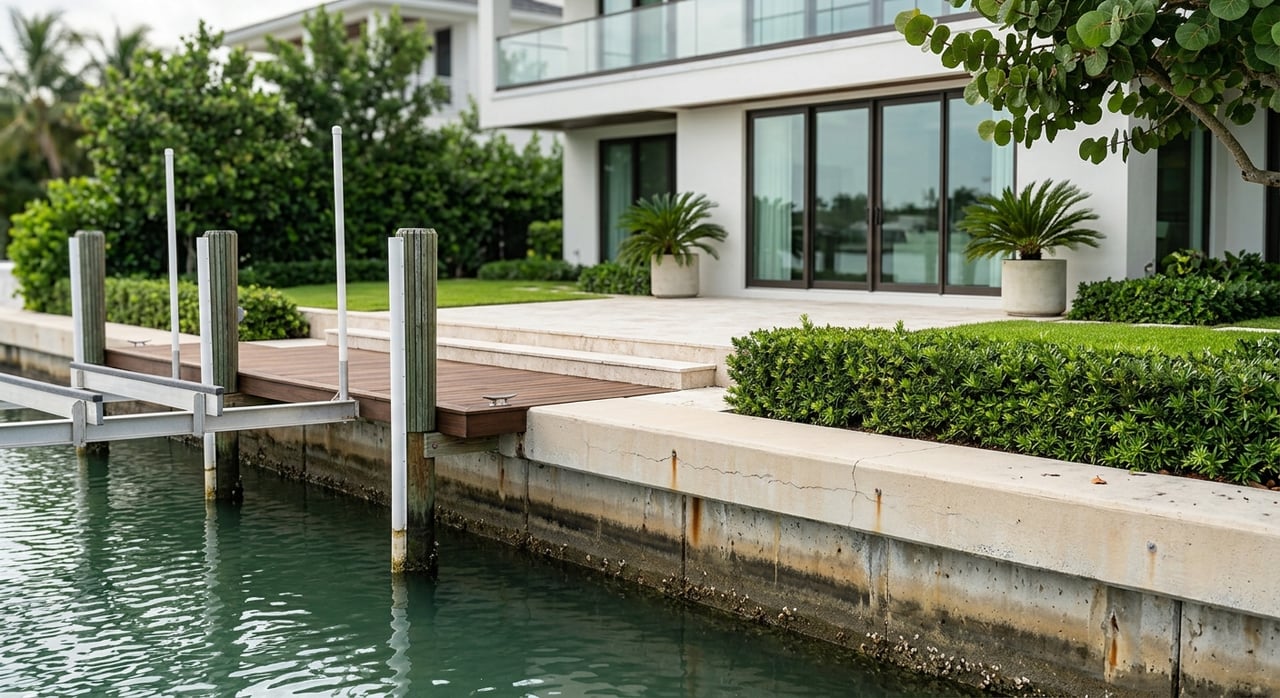
If you are evaluating a home here, treat the seawall, riprap, drainage patterns, and dock layout as core components of value. A beautiful lot line on the water is only part of the picture. The physical condition of the waterfront edge is just as important.
Port Royal has stricter dock rules
Port Royal follows different standards. The city’s pier code summary states that Port Royal piers and boat lifts in the R1-15A zone are subject to a 20-foot side-yard setback and a 22-foot waterward limit from the toe of the revetment.
There is a limited pathway for piers on Naples Bay and Gordon Pass to extend beyond 22 feet if needed to reach 5 feet mean low water, but the setbacks increase as that offshore extension increases. For buyers, that means your survey, permit file, and actual dock dimensions need to line up carefully before closing.
Verify Seawalls, Riprap, And Marine Permits
Before you close on any waterfront property, confirm what has been built, what was permitted, and what may need repair. The City of Naples says riprap construction or repair requires a marine permit, and seawalls and revetments must be kept in good repair. The city also determines whether the work is on a manmade canal or a natural waterbody, which can affect requirements.
On natural waterways, the city says riprap must be placed at the base of new and repaired seawalls. That is an important distinction for buyers because shoreline type can affect future repair scope and cost. You want to know that before the inspection period ends, not after ownership transfers.
The city’s marine permit application requirements also show how detailed the review process can be. Depending on the work, the file may need a scaled site plan or survey, an aerial showing adjacent lots, and signed-and-sealed drawings by a professional engineer or architect. If state or federal approval is required, written proof must be in place before the city issues the permit.
Check Dock Dimensions Carefully
Aqualane Shores dock limits
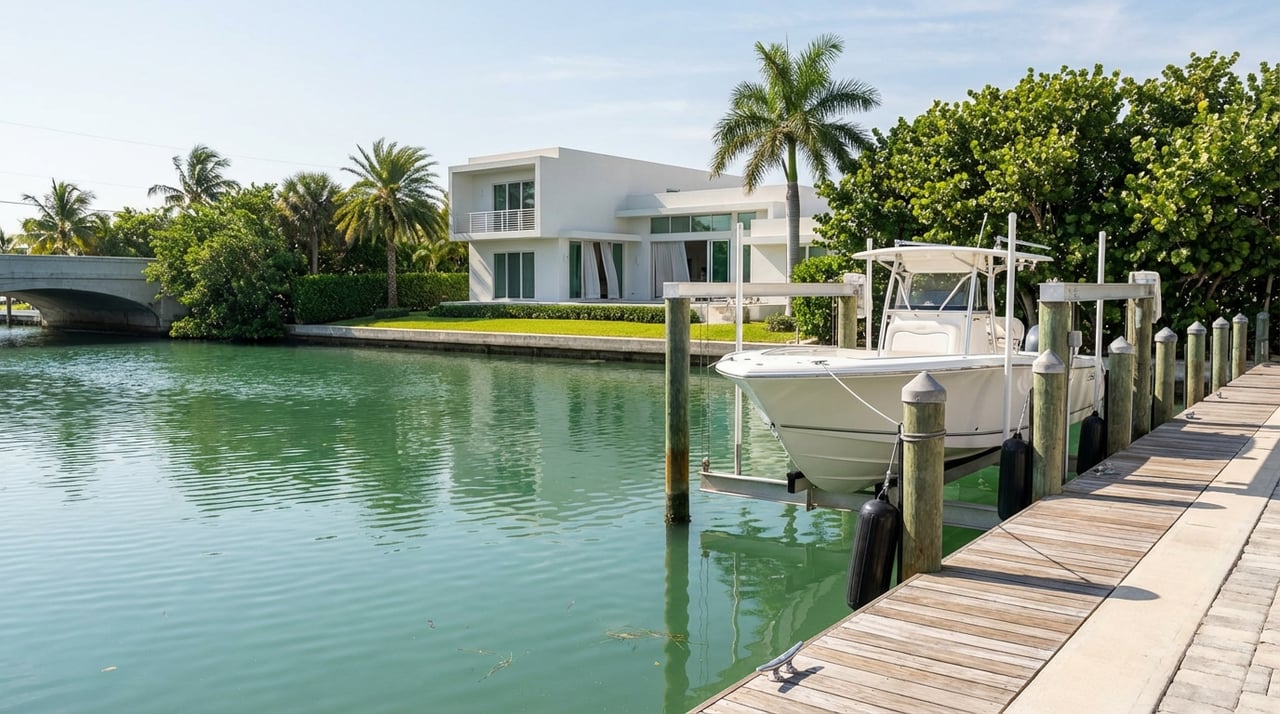
Aqualane Shores has subdivision-specific dock rules. The city code summary states there are 7.5-foot side-yard setbacks for piers, boat lifts, and vessels, plus a maximum pier projection of 15 feet or 10 percent of waterway width, whichever is more restrictive.
There is also a combined pier-and-lift limit of 25 feet or 25 percent. On paper, those numbers may look simple. In practice, they can affect whether a current layout is conforming and what changes you may be able to make later.
Port Royal dock limits
Port Royal’s standards are different and more exacting. As noted above, the city applies a 20-foot side-yard setback and a 22-foot offshore limit from the toe of the revetment, with special provisions for certain waterfront locations to reach navigable depth.
This is one reason waterfront buyers should not rely on listing language alone. The better approach is to compare the survey, current improvements, and permit history against the applicable code language for that specific neighborhood.
Confirm Whether Structures Are Grandfathered
Older waterfront homes often have docks, lifts, mooring piles, or other improvements that do not fit current standards exactly. The city’s pier code summary says certain existing piers, lifts, mooring piles, and vessels in Port Royal were grandfathered as nonconformities as of the effective date, unless a formal determination is required.
That sounds helpful, but it should not be treated casually. You need documentation showing whether an improvement is conforming, grandfathered, or dependent on a variance or administrative approval. The same city code summary also notes that no pier may interfere with safe navigation, rafting is generally not allowed without a permit, and a post-construction survey is required before final approval of a new pier.
Review Flood Zones And Elevation Early
Flood review should happen early in your process, especially if you are financing, planning renovations, or comparing insurance costs. The City of Naples states that the 2024 Flood Insurance Rate Maps are now in effect for construction and insurance purposes, replacing the 2012 maps.
The city explains the differences among zones including AE, AH, VE, and X, and directs owners to the city interactive flood map or FEMA map for confirmation. Those classifications matter because they can influence insurance requirements, renovation planning, and long-term ownership costs.
Collier County also states that if you want flood insurance, or you want to seek removal from the federal flood insurance purchase requirement, an elevation certificate is needed. The certificate must be prepared by a professional surveyor and mapper. For a waterfront buyer, that document is often worth requesting up front.
Understand Insurance And Rebuild Risk
Flood insurance is not the same as homeowners insurance. The City of Naples notes that flooding is not covered by a normal homeowners policy, that flood insurance is available through the NFIP, and that it is required for properties in a Special Flood Hazard Area when the mortgage is federally backed.
The same city guidance points out a 30-day waiting period for most policies and states NFIP coverage caps of $250,000 for most residential structures and $100,000 for contents. Naples also notes its CRS Class 5 rating can provide up to a 25% discount on standard flood insurance policies. For buyers, those details can affect both your closing timeline and your annual carrying costs.
Rebuild and remodel rules matter too. The city says almost all permitted development requires floodplain review, and if a structure in a Special Flood Hazard Area is substantially damaged or substantially improved, it generally must be brought into compliance with current flood regulations, including elevation to or above base flood elevation.
The city also says residential floodproofing below base flood elevation is not permitted in residential buildings or in Coastal High Hazard Area Zone VE. If you are buying with renovation plans, this point deserves close attention before you finalize your numbers.
Pull The Right Public Records
Waterfront due diligence is only as good as the records behind it. The City Clerk states that it maintains the official records of the City of Naples, including ordinances, resolutions, meeting materials, and public-record access.
That means you should confirm permit history, variance history, council approvals, and any code enforcement matters from the official record set, not just from a seller disclosure or marketing package. This is especially important when the property has an older dock, prior shoreline work, or signs of multiple alterations over time.
Ask About Assessments And Infrastructure History
A waterfront purchase can also carry financial items that are easy to miss if you only focus on the structure and lot. The city lists both the Port Royal Area Dredging project and the Aqualane Shores Utility Line Extension project as completed special-assessment areas with assessments still being paid through the property tax rolls, according to the city’s special assessment information.
For buyers, the practical question is simple: is any balance being paid at closing, or will you assume it? This should be clarified during due diligence and reflected in your closing review so there are no last-minute surprises.
Build A Waterfront Due Diligence Checklist
A strong review package for Aqualane Shores or Port Royal should include:
- Current survey
- Elevation certificate
- Permit file for the seawall, dock, riprap, and lifts
- Title commitment and any payoff statements for assessments
- Grandfathering, variance, or administrative approval documentation
- Confirmation of whether the parcel fronts a manmade canal, natural waterway, or shoreline subject to the Coastal Construction Control Line
If the property is seaward of the Coastal Construction Control Line, the City of Naples says a coastal construction setback permit is required for new construction, excavation, fill placement, shoreline protection repairs, and related work. That can be especially relevant for certain Port Royal properties, including beachside parcels.
A Smart Way To Compare These Neighborhoods
If you want a practical way to think about it, Aqualane Shores due diligence usually centers on low-lying drainage conditions, canal-specific dock limits, and seawall condition. Port Royal typically requires added scrutiny around stricter shoreline standards, grandfathering verification, dredging history, and possible CCCL-related issues on applicable sites.
In both neighborhoods, the best decisions come from matching the physical improvements on the property to the governing records and rules. That kind of research-first approach can help you protect value, avoid avoidable repair surprises, and move into closing with more confidence. If you want guidance on evaluating waterfront opportunities in Naples with a more detailed, property-specific lens, connect with Amanda Van Slyke.
FAQs
What should you verify before buying a waterfront home in Aqualane Shores?
- You should review the current survey, elevation certificate, permit files for the seawall and dock, dock dimensions, drainage context, and any assessment balances tied to the property.
How do Port Royal dock rules differ from Aqualane Shores dock rules?
- Port Royal has different shoreline standards, including a 20-foot side-yard setback and a 22-foot waterward limit from the toe of the revetment, while Aqualane Shores has 7.5-foot side-yard setbacks and separate projection limits tied to waterway width.
Why does a flood zone matter for a Naples waterfront purchase?
- Flood zone classification can affect insurance requirements, renovation planning, floodplain review, and whether future improvements may need to meet current elevation standards.
What does grandfathered mean for a Port Royal dock or lift?
- It generally means an existing improvement may be allowed to remain as a legal nonconformity under city rules, but you should confirm that status with the permit file and any formal city documentation.
Are special assessments important in Aqualane Shores and Port Royal closings?
- Yes. The city states certain completed projects in both areas still have assessments being paid through the property tax rolls, so buyers should confirm whether any remaining balance will be paid at closing or assumed by the purchaser.